

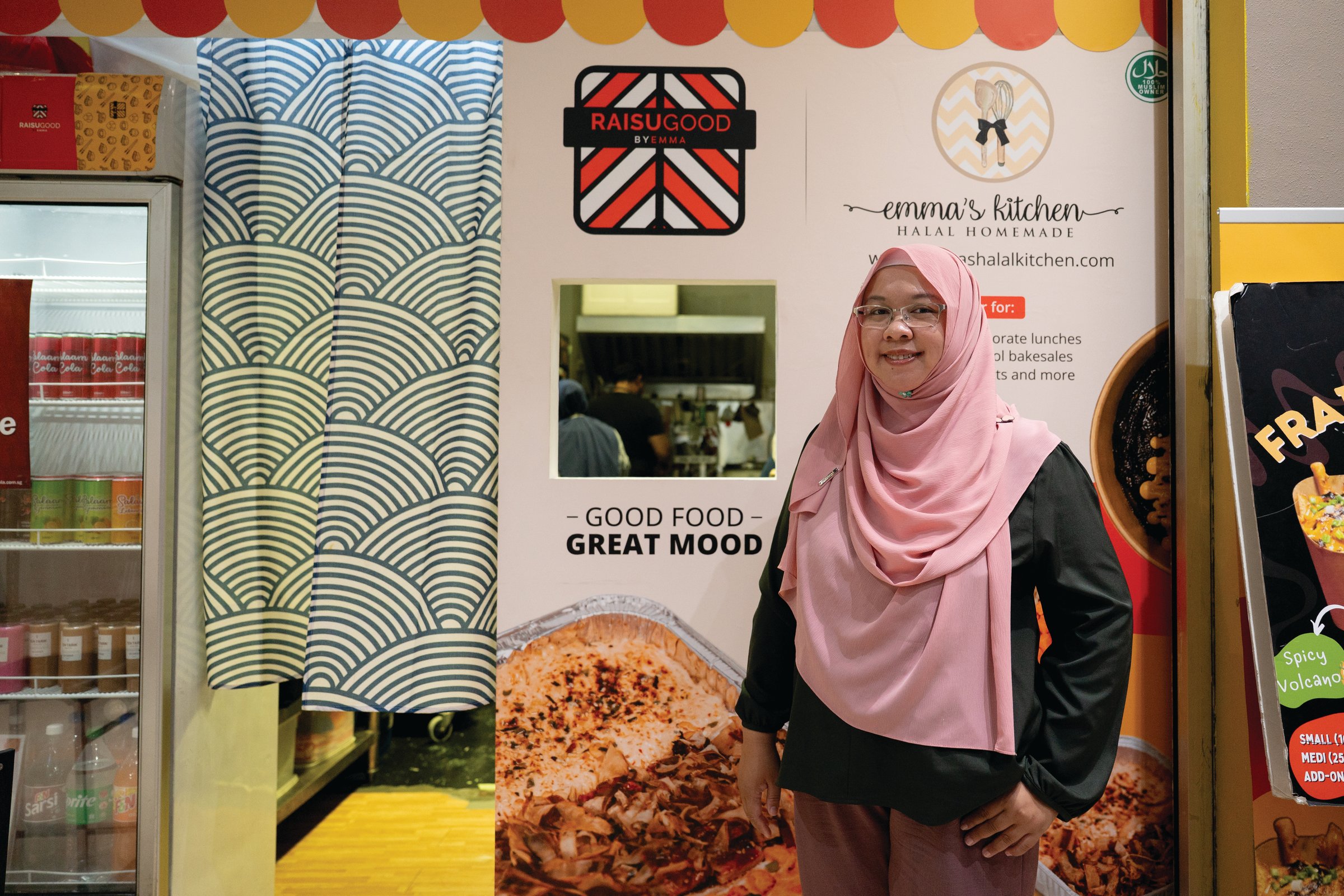
Long before Raisugood, Raodah Arshad had almost given up on entrepreneurship. In 2012, her family took over an existing franchised food business, and Raodah saw it as a chance to learn the ropes of F&B with processes already in place. The business struggled to turn a profit, and without the guidance and support she needed, she sold it five years later.
The experience left her drained emotionally, mentally, and financially. Running her own business had been her dream since she was seventeen, yet she now felt defeated, and for a while she believed her entrepreneurial journey was over. She did not know it then, but the lessons from that chapter would lay the foundation for something new.
An Early Taste of Business
Raodah credits her late father and her uncle as two of her earliest entrepreneurial influences. Watching her uncle lead his own company, with her father supporting him behind the scenes, planted the idea that she too could build something one day.
In her second year of polytechnic, online shopping was beginning to take off in Singapore. Raodah noticed people organising group buys on platforms such as LiveJournal, sourcing products unavailable locally and bringing them in for groups of buyers. Rather than simply joining in, she wondered how it all worked. “If they could find suppliers and bring these products into Singapore, I thought, maybe I could do it too.”
She taught herself to source products, communicate with overseas sellers, arrange shipping, and manage orders. Even after graduating and spending four years working in a research laboratory, she kept running small businesses on the side.
The Dish That Changed Everything
Raodah has always loved selling. While she does not see herself as a strong cook, she has always believed in her mother’s recipes. Her mother brought the talent in the kitchen, and Raodah gravitated naturally towards marketing and turning home cooking into a viable business.
During the COVID-19 pandemic, her mother persuaded her to try a dish called sushi bake. The concept was new to Raodah, but one taste convinced her. Around the same time, she secured an advertising spot with a well-known influencer in the Malay community. It was Ramadan, and many home-based businesses would be sending cookies and baked goods. Not wanting to get lost in a sea of similar treats, Raodah sent the sushi bake instead.
Orders poured in almost immediately, even though Raisugood’s Instagram page did not yet have a single photo of the product. For the first time since leaving her first business, Raodah felt excited about entrepreneurship again. Her aunt joined her mother in the kitchen, while Raodah focused on branding, marketing, sales, and refining the ordering process.
From Home Kitchen to Licensed Premises
As demand grew, Raodah moved Raisugood out of its home-based setup and into a proper kitchen licensed by the Singapore Food Agency. The move opened doors to corporate catering and government events that would have been out of reach for a home business.
This time, she had experience on her side. Her first venture had taught her about overheads, operations, and customer expectations, yet starting again was no less daunting. “My biggest fear is to fail. I told myself I could not afford to fail. I needed it to work and to sustain it in the long run.”
One lesson stood out: a physical location alone does not guarantee footfall. Consumer behaviour had shifted since the pandemic, and relying on a single channel felt risky. So Raodah asked a different question. Rather than waiting for customers to come to Raisugood, how could Raisugood go to them?
Meeting Customers Where They Are
Raisugood began appearing regularly at pop-up events in malls close to its target audiences, such as Causeway Point and Jurong Point, as well as community events like Twilight Flea & Feast and Celebfest. Repeated exposure built recognition. Customers who knew Raisugood online could now see its products in person, while new customers discovered the brand at mall activations.
The pop-up circuit also connected Raodah with other entrepreneurs and convinced her of the value of diversifying sales channels. Social commerce became another avenue, with TikTok Live letting Raisugood engage customers and demonstrate products in real time.
AI has helped too, allowing Raodah to run lean by supporting several operational roles. She is careful, though, about how she uses it. “The businesses that will stand out are those that use AI as a helpful tool to complement their work, rather than as a crutch to get everything done,” she says. For her, technology should never replace the personality and human connection that make a brand distinctive.
Quality Without Compromise
Quality is non-negotiable for Raodah. She often reminds her staff that “if the food does not meet the standard you would accept as a customer, it should not leave the kitchen.”
She also builds relationships with customers so they feel comfortable sharing honest feedback. Once, a regular customer let her know the beef had been a little too salty that day. “She was not complaining to demand a replacement,” Raodah recalls. “She simply wanted us to know because she believed in the product.” Raodah saw the feedback as a sign of trust and a chance to do better.
Giving Back
Raodah believes businesses of every size have a role in giving back. Raisugood has taken part in community efforts such as the Purple Parade and worked with Jamiyah to support children with special needs.
That thinking extends to the environment. Raisugood switched to biodegradable cutlery despite it costing three times as much, is searching for affordable recycled or biodegradable bags, and has moved to an electric delivery van to reduce its carbon footprint.
Still Standing, Still Building
Raodah hopes Raisugood will one day create opportunities for others through employment, collaboration, and mentorship. “Empowerment should not only come from telling others to dream big. It should also involve opening doors, sharing knowledge and giving them the confidence and opportunities to take their first step.”
She is focused on growing through referrals and word of mouth, and on strengthening Raisugood’s online presence so it does not depend on any single channel. Above all, she hopes to leave a legacy her children will be proud of. They were the reason she stayed resilient, and the reason she gave entrepreneurship another chance.
“If the brand I build can outlive my efforts, bring people together and remind my children of what determination and love can create, that would be a legacy truly worth leaving behind.”
Take the Leap, Then Keep Going
To Raodah, the spirit of enterprise is a mindset. After failing once and losing her confidence, she chose to go again, willing to grow, take risks, and step into the unknown.
She encourages aspiring entrepreneurs to take the leap, calling it one of the most rewarding paths for personal growth. She also advises building an online presence before committing to a physical space, and surrounding themselves with other business owners, because entrepreneurship can be isolating. “The growth, both in your business and in yourself, will be more than worth it.”
The setback she once thought had ended her journey became part of what prepared her for Raisugood. In many ways, Raisugood exists because Raodah chose to learn from that chapter and begin again.
Website: https://emmashalalkitchen.com/



Follow us for more tips & insights
Join our email list for exclusive updates